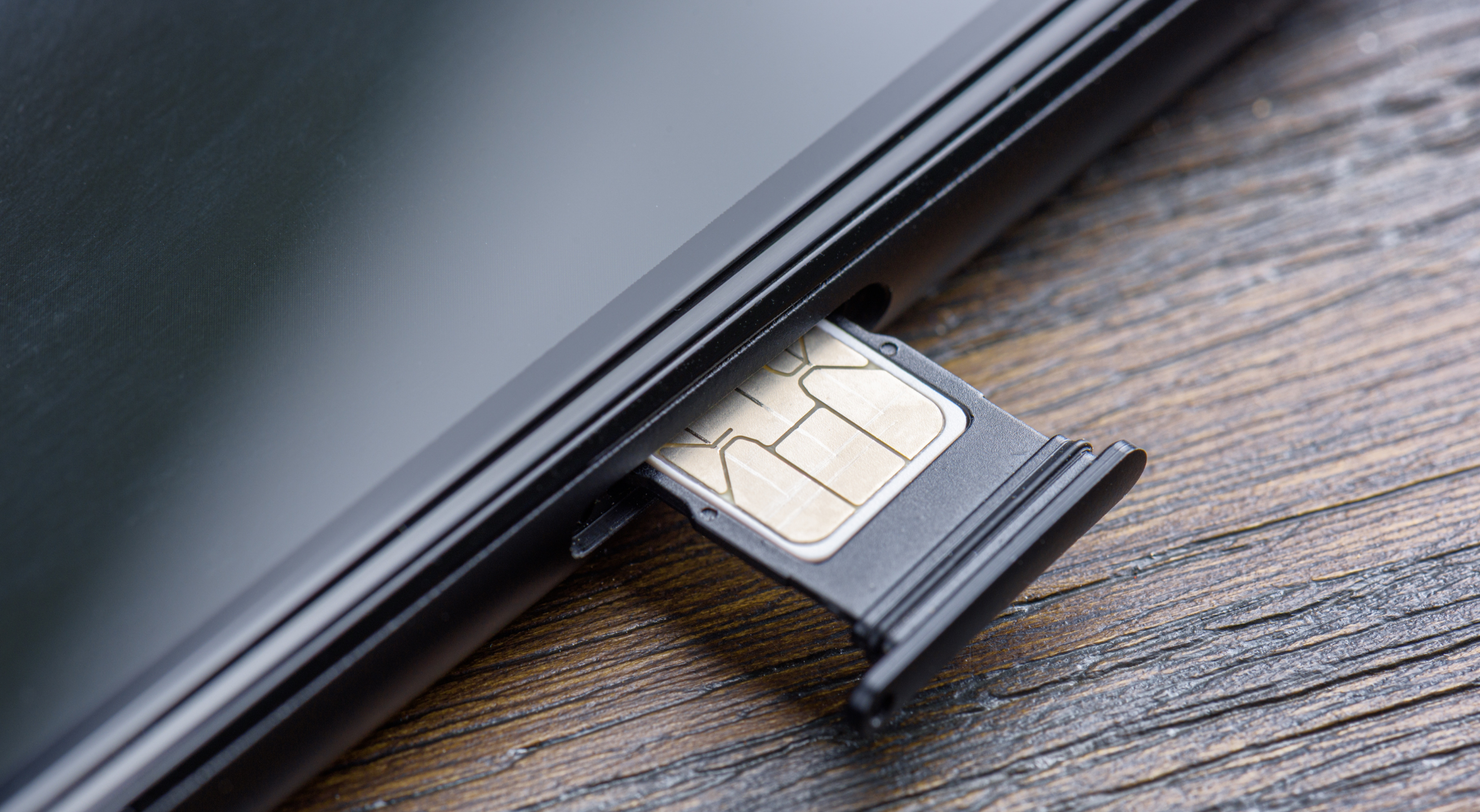
eSIM technology is becoming standard as manufacturers move toward slimmer, more secure cell phones, and even eSIM-only devices. But while digital SIMs offer convenience, they can also introduce new challenges around compatibility and user control.
Not every phone supports eSIMs yet, setup can require extra steps (and a working internet connection), and switching between devices or carriers isn’t as simple as popping out a SIM card.
This guide explains how the disadvantages of eSIMs affect everyday use. We’ll also provide tips on what to look for when choosing a more reliable, privacy-focused eSIM provider.
What Is an eSIM?
An eSIM is a digital version of a SIM card built directly into a device’s hardware. An eSIM digitally stores your mobile number and network profile on a tiny chip soldered into the device, rather than a removable plastic card.
Traditional SIM cards let you switch carriers or numbers by swapping physical cards. With eSIMs, that happens through software: carriers provision your profile remotely, and your phone activates it digitally rather than mechanically.
The adoption of eSIM is increasing rapidly, fueled by several compelling factors:
- Industry adoption by device makers: Leading smartphone manufacturers like Apple and Google are moving toward eSIM-centric designs. For example, recent iPhones (iPhone 14 and later) and Pixel devices (Pixel 10 and later) in the U.S. are eSIM-only.
- Multiple profiles on one device: A single eSIM can store multiple carrier profiles (around 5–10), enabling you to separate work and personal lines or switch carriers digitally for the best deal.
- Improved convenience for travelers: One of the biggest advantages of using an eSIM is that you can switch to local plans or data services in different countries without buying or swapping physical SIM cards, making international travel often more cost-effective.
- Growing global infrastructure: More than 440 operators worldwide now support eSIM functionality, and eSIMs are expanding in IoT and connected devices.
5 Disadvantages of eSIM Cards and Their Impact on Everyday Use
While eSIMs have gained momentum for their flexibility and convenience, they’re not a perfect fit for every situation or user. As with any newer technology, there are scenarios where eSIMs can make things more complicated than just swapping a physical SIM card.
Below are six practical and technical eSIM disadvantages that could impact your everyday experience:
- Limited device compatibility
- Internet dependency for setup
- Difficulties switching devices
- Travel limitations
- Carrier-level vulnerabilities
1. Limited Device Compatibility
One of the biggest disadvantages of eSIM today is that not all phones, tablets, or other devices support it yet.
eSIM capability requires specific hardware and firmware support: an eUICC chip and OS support layers for remote provisioning. Without those, the device can’t download or manage profiles, even if carriers in your region support eSIM. Many older, budget, and even some mid-tier devices lack the necessary hardware and software.
2. Internet Dependency for Setup
Unlike physical SIMs, which can activate with basic network signals the moment you insert them, eSIM activation typically requires your phone to download a carrier profile over Wi-Fi or cellular data.
That profile is delivered via remote SIM provisioning (RSP), an encrypted software process in which your device authenticates the eSIM chip using the carrier’s credentials. Without internet access, there’s no channel to fetch or authenticate that profile.
This can be a real problem in remote locations with weak or no internet, or when traveling and arriving without Wi-Fi, where you need to activate your eSIM. In these cases, you won’t be able to complete the digital setup process until connectivity is restored.
3. Difficulties Switching Devices
With physical SIM cards, switching to a different phone is as simple as removing the old SIM from the old phone and inserting it into the new one. No setup required.
However, with eSIM, you usually need to re-provision your profile through your carrier’s system or an app, which can take minutes or hours depending on the provider. The entire process may require you to:
- Contact your carrier to deactivate the profile on the older device
- Generate and scan a new QR code for the new device
- Wait for carrier reactivation support for some carriers
Cross-platform transfers (e.g., Android to iOS) can be complicated or unsupported on certain carriers, adding another layer of friction.
This can become frustrating when your old phone is damaged, and you’re looking for urgent communication. Some carriers even limit how often you can transfer a profile or don’t support eSIM transfers at all.
4. Travel Limitations
eSIMs have a strong reputation for international travel. One of their biggest advantages is the ability to add or change plans digitally, even before you reach your destination.
However, the issues arise when you’re traveling to a country or remote region where eSIM coverage is patchy or unavailable, forcing you to fall back on physical SIMs or pricey international roaming plans.
Even where eSIM is supported, the available carriers, pricing, and plan features vary widely by destination. Some countries have limited purchases, expensive data, or plans locked to local billing requirements. In these cases, a local physical SIM plan is often significantly cheaper than the eSIM data plan.
The table below shows some of the location-specific restrictions you might face with eSIMs as of current:
Country | Potential Restrictions | Notes |
Turkey | Bans websites/apps and new activations for many global eSIM providers like Airalo, Nomad, and Sally | Pre-activated plans work reliably |
Russia | Foreign eSIMs may face a 24-hour data/SMS block on first connection | Voice continues to work usually; full online features restored after 24 hours |
India | Certain providers, such as Airalo and Holafly, are banned | Most other major global eSIM providers are available |
UAE | Cannot install or activate certain international eSIMs after landing | Recommended to pre-activate plans abroad |
5. Carrier-Level Vulnerabilities
Carrier and network infrastructure risks aren’t unique to eSIMs; they affect all mobile users. Your SIM relies on carrier systems to authenticate devices, route traffic, and deliver voice and data, and most of those systems remain vulnerable and exposed. Below are some of the main concerns associated with traditional mobile networks:
- SIM swap scams: Attackers can use social engineering tactics to convince carriers to transfer your number to another device, regardless of SIM type.
- SS7 vulnerabilities: Many legacy networks still use outdated signaling protocols like SS7 that lack modern authentication and allow attackers to intercept SMS and calls or track locations.
- Limited control over personal data: Carriers manage and retain identifiers, connection logs, and billing records under their policies. Users have limited influence over how long this data persists or how it’s processed.
These carrier-level threats are often overlooked, but you can stay protected from them by opting for a privacy-focused eSIM provider like Cape.
With Cape, switching your number to a new device requires a unique 24-word passphrase stored locally on your device. Without it, no one, not even the carrier, can transfer your number to another device, mitigating the possibility of SIM swaps.
When you’re abroad, Cape’s Secure Global Roaming feature protects your data from foreign networks and entities. It does so by routing your network traffic through its U.S.-based core instead of being handled entirely by the foreign carrier. This reduces the amount of sensitive information exposed to potentially insecure or untrusted networks while abroad.
Should You Get an eSIM?
Despite the drawbacks covered above, eSIMs are the future of mobile connectivity. And for the majority of users with a compatible device who travel mainly within regions with strong support, the advantages of eSIM cards outweigh the limitations.
When weighing the pros and cons of eSIMs, it’s clear that eSIMs offer greater security and convenience than regular SIMs, making them a strong choice for everyday connectivity in most urban, developed areas.
How To Choose the Right eSIM Provider
When choosing an eSIM provider, consider how reliable and secure your mobile connectivity will be, especially if you use eSIMs for business, travel, or privacy-conscious communication. The following criteria can help when evaluating different providers:
Criteria | What To Look For |
Network coverage | Reliable 5G support nationwide or globally (depending on your travel goals) |
Clear policy on minimal data collection and no selling of subscriber information | |
Strong security and account protection | Protections such as SIM swap safeguards and defenses against SS7 signaling exploits |
Pricing transparency | Clear, upfront pricing without hidden fees or surprise costs |
Independent vs. third-party infrastructure | A self-owned mobile core, as it gives the carrier direct control over how your data is routed and secured, rather than relying entirely on third-party systems |
Most eSIM providers focus on coverage and price, often treating privacy as an afterthought. Many of them operate on a trust-based model, exposing user data to any third party that provides service or infrastructure for their networks.
If you want a provider that combines eSIM convenience with privacy-centric data policies and modern cryptography, switch to Cape.
Cape Makes Security the Standard: Here’s How
Cape is America’s privacy-first mobile carrier, providing premium, unlimited, and nationwide call, text, and data. Unlike other providers, our service is built from the ground up with privacy and security at its core.
Mainstream carriers track you and store your data, often without your consent. Cape takes a different path—we collect the absolute minimum amount of information to provide you with service.
Any information we do collect is retained for the minimum amount of time possible. Most carriers store call data records (CDRs) for years, sometimes indefinitely. Cape stores yours for just 24 hours, and we have a commitment to never sell your data.
Cape service includes security features that no other carrier offers:
- Minimal Data Collection: During onboarding, we don’t ask for your name, Social Security number, or address. We only collect what’s necessary to provide you with service, and we retain it for the minimum amount of time possible.
- Identifier Rotation: Every SIM card has an International Mobile Subscriber ID (IMSI), a unique identifier which your device uses to register with cellular networks. Most carriers assign a fixed IMSI that stays the same for the life of your account, making it easy for your carrier, advertisers, and bad actors to identify and track your device over time. Cape breaks that pattern by allowing subscribers to automatically rotate their IMSI every 24 hours, so you appear as a different subscriber every day, making it much more difficult for anyone to follow or track your movements.
- Secondary Numbers: Your phone number is a target for data brokers and scammers. Retailers, websites, apps—everyone is routinely asking you to share your number with them, which exposes you to a variety of risks. Many turn to VoIP numbers to use as secondary lines, which can be helpful, but cost extra, don’t work with 2FA, and aren’t encrypted. Cape provides subscribers with two free additional SMS/MMS lines that are middle-to-end encrypted. With secondary numbers, you can reserve your primary number for communicating with your close friends and family, and use the other for anything from shopping and signing up for discounts, to receiving secure OTPs.
- Disappearing Call Logs: Call and text records reveal a lot about you, from who your closest relationships are to when and where communication took place. With traditional carriers, your call and text metadata doesn’t just disappear; it’s retained, analyzed, and folded into a lasting customer profile. At Cape, we’re built to forget and delete these records after just one day.
- SIM Swap Protection: A SIM swap happens when an attacker convinces your carrier to transfer your number to their device, allowing them to receive your calls and texts, trigger password resets, and gain access to your accounts. Cape protects against SIM swaps by removing humans entirely from the loop. During sign-up, you receive a 24-word phrase that generates a private key tied to your number. This phrase is the only way to move your number to a new device or carrier. No one, not even Cape, can transfer your number without your phrase, giving you full control over your number.
- Network Lock: Traditional cellular networks were designed for interoperability, not security. Outdated and legacy network protocols like SS7 have vulnerabilities that allow attackers to hack in and track your location, intercept your calls and texts, and steal sensitive information. Cape’s Network Lock uses a proprietary signaling proxy to verify that your device’s physical location matches the network it’s trying to attach to. If anything looks suspicious, like a mismatched location, we block the connection.
- Encrypted Voicemail: Voicemails can reveal more than you think, from personal messages to authentication codes, yet most voicemail systems are outdated and unencrypted. Cape encrypts your voicemails so that only you can access them.
- Secure Global Roaming: While you’re traveling abroad, your phone connects to local telecom providers to provide you with connectivity. But not all networks are secure, and not all governments treat privacy the same. Cape routes your traffic through our U.S.-based mobile core. Our Secure Global Roaming gives you the convenience of international data roaming without exposing your identity or communications. You get up to 15GB per month of international roaming included in your plan.
These features are made possible because we’re a “Heavy” Mobile Virtual Network Operator (MVNO).
Other MVNOs (such as Mint Mobile, Cricket, etc.) simply ride on top of the mobile core, SIMs, and physical infrastructure of their underlying MNO partner. At Cape, we actually own our own mobile core and provision our own SIMs.
This gives us control over how accounts are authenticated, what data we do and don’t collect, how long we retain it for, as well as the ability to build proprietary features like Identifier Rotation. No other carrier on the market has this capability.
Reclaim Your Privacy: Switch to Cape Today
Ready to ditch traditional telcos and switch to a privacy-first mobile carrier? Visit cape.co/get-cape to sign up.
Thanks to our partnership with Proton, you can also take your privacy a step further and get Proton Unlimited or Proton VPN Plus for only $1 for the first six months.
Share it