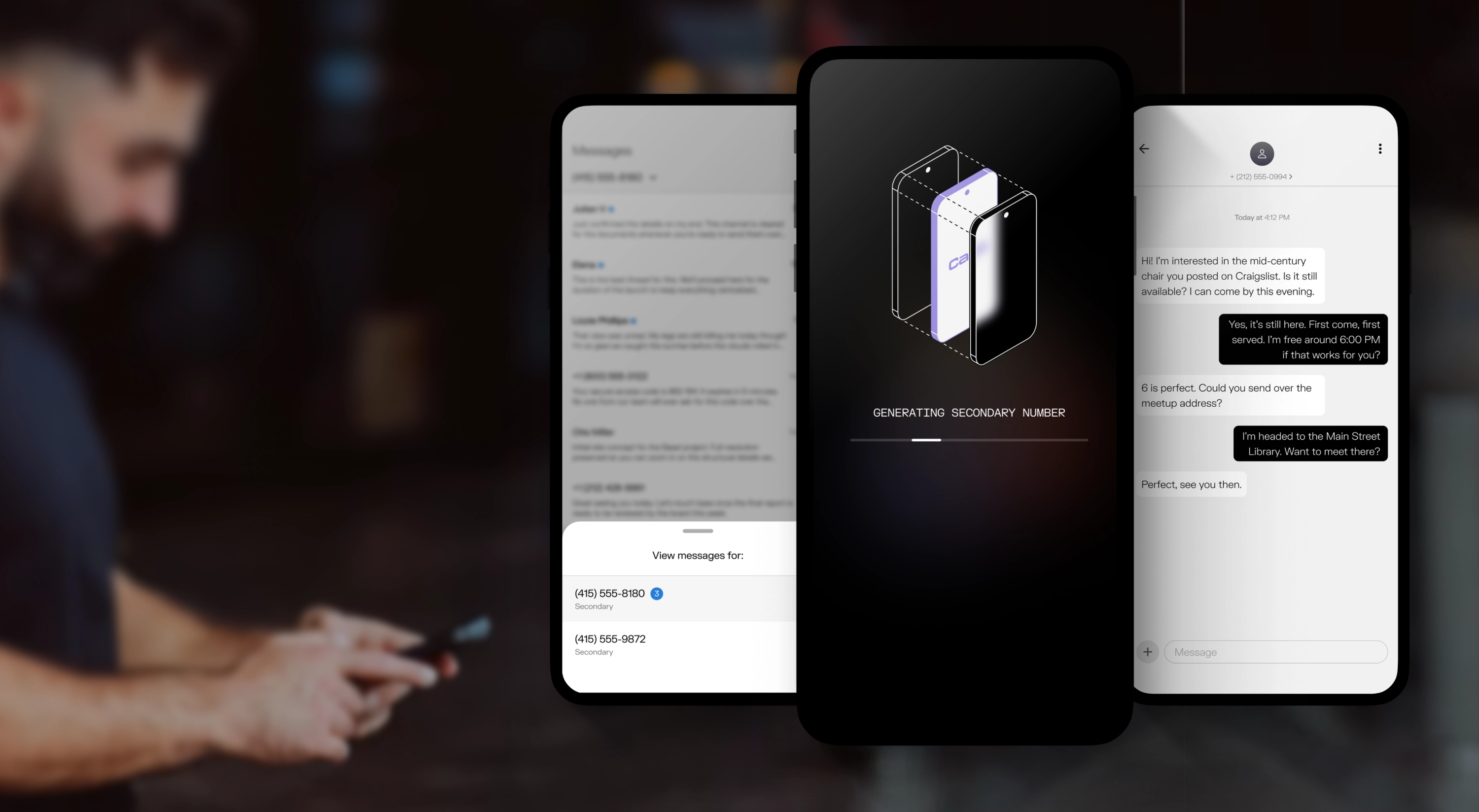
Your phone number is a universal identifier. It is no longer used exclusively by close contacts to reach you; it is now the primary tool used to create accounts, sign up for discounts, and verify your identity. The range of ways your phone number is used in today’s digital economy is vast, both in terms of its purpose and its associated threat level.
The Risk of Overexposure
Sharing a single primary number across every digital and physical touchpoint creates significant security and privacy risks:
- Retail Transactions: Over 60% of US consumers share their number during a purchase each month. This exposes users to data brokers, tracking, aggressive SMS marketing, and spam.
- Sign-ups and Logins: Most apps and websites utilize SMS OTP (One-Time Passwords) for authentication. Using a primary number here creates a permanent link between your identity and third-party databases that are prone to data breaches.
- P2P Interactions: While only 10-15% of consumers engage in peer-to-peer marketplaces or dating apps monthly, these interactions carry the highest risk for doxing, stalking, and physical safety.
Such a critical identifier should not be shared with untrusted parties, yet the modern economy routinely demands it.
Existing Alternatives Fall Short
Many privacy-conscious individuals may try to mitigate these risks through VoIP (Voice over IP) apps. These apps provide numbers that run over the internet rather than a cellular network, but they are often insufficient for true security:
- VoIP numbers generally do not offer encryption.
- VoIP numbers are frequently flagged as "non-mobile” and consequently do not work with 2FA or OTP services for banks and major platforms.
There are also some services that offer a unique number for every interaction, but the complexity of managing dozens of aliases often hinders consistent use.
Introducing Cape’s Secondary Numbers
Cape is excited to announce Secondary Numbers, now available as an Experimental Feature within the Cape app.
All Cape customers now have access to two additional real phone numbers included in their plan. Currently, these numbers only support SMS.
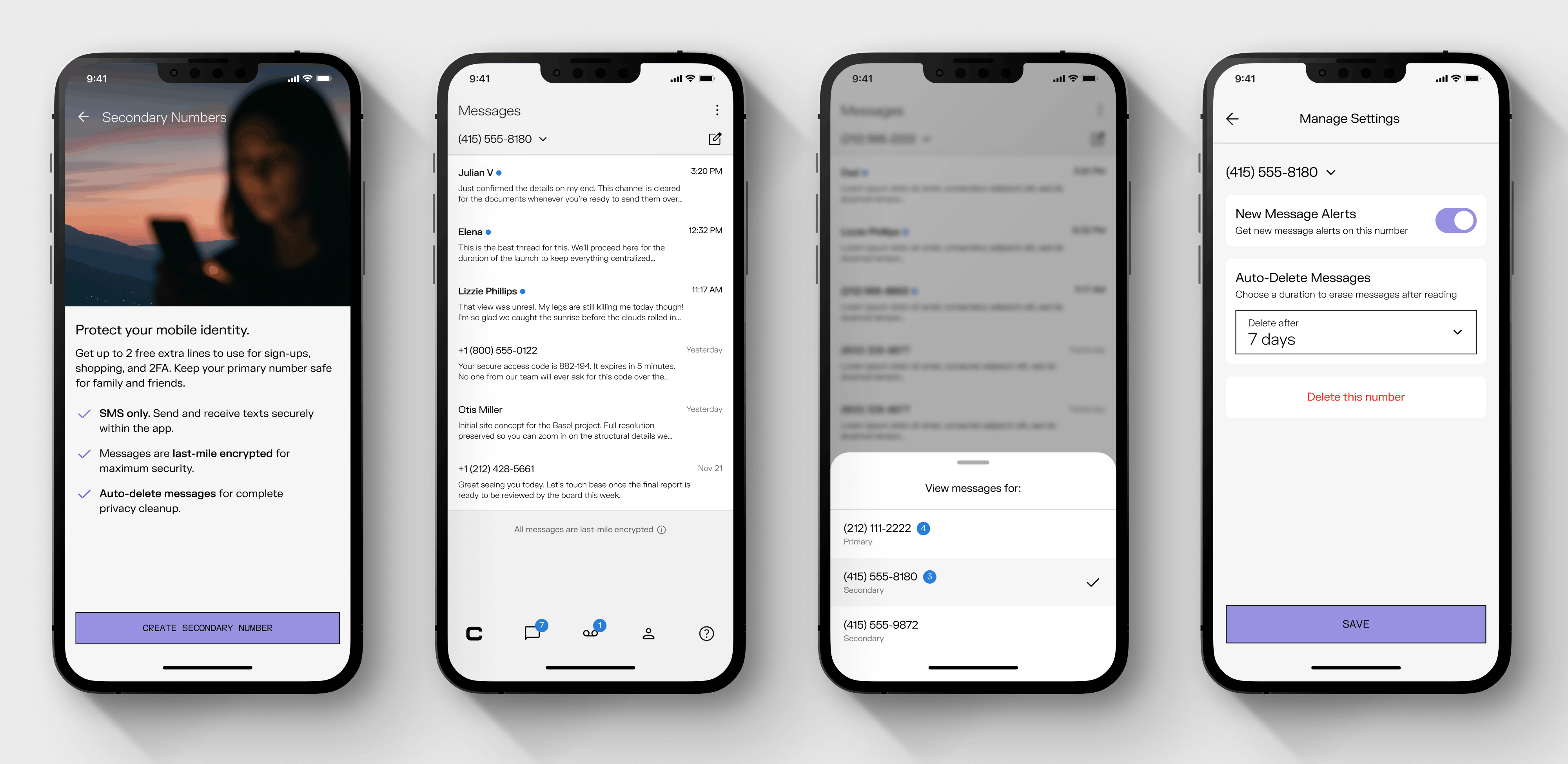
Cape Secondary Numbers feature middle-to-end encryption. This means that while standard SMS is typically vulnerable as it travels across various networks, Cape secures the communication path from our core infrastructure directly to your device. This ensures your data remains protected from "last-mile" vulnerabilities, like compromised cellular base stations. To set up Last-Mile Encryption for SMS/MMS on your primary number (iPhone only), see here.
When using Secondary Numbers, all communications are sent securely as data over HTTPS, so Cape's roaming partners cannot access their content. Additionally, Cape Secondary Numbers are not visible to any underlying MNO (neither the MNO underlying Cape's network, nor the MNO of the person you're messaging). So even if someone learns of the Secondary Number you've handed out and has access to an intermediary carrier, they would not find a record of activity under the Secondary Number.
With Secondary Numbers, Cape subscribers can move away from single-number vulnerability and adopt a more intentional "siloed" identity strategy. As an example:
- Primary Number: Reserved exclusively for trusted friends, family, and inner-circle contacts.
- Secondary Number A: Utilized for retail, shopping, spam-heavy alerts, and one-off digital sign-ups.
- Secondary Number B: Dedicated strictly to sensitive 2FA (Two-Factor Authentication) and account security.
How to get started
On January 27th, 2026, Cape exited our beta and launched several new features, including Last-Mile Encrypted Texting, Secure Global Roaming, and Identifier Rotation.
Share it