Your phone number is more than a contact detail. It ties into your bank accounts, social profiles, and password recovery systems, making it a high-value target once exposed. And unlike a password, replacing it is slow and disruptive.
A burner phone number can reduce that exposure by providing a temporary, disposable line for short-term or low-trust interactions. However, the term "burner" encompasses everything from cheap flip phones to VoIP apps to secondary eSIM lines, each with different privacy benefits and tradeoffs.
This guide breaks down how burner phone numbers work, when they make sense, and how different approaches to temporary numbers compare for modern mobile communication.
What Is a Burner Phone Number?
A burner number is a secondary or temporary phone number used to separate personal communication from professional or online use.
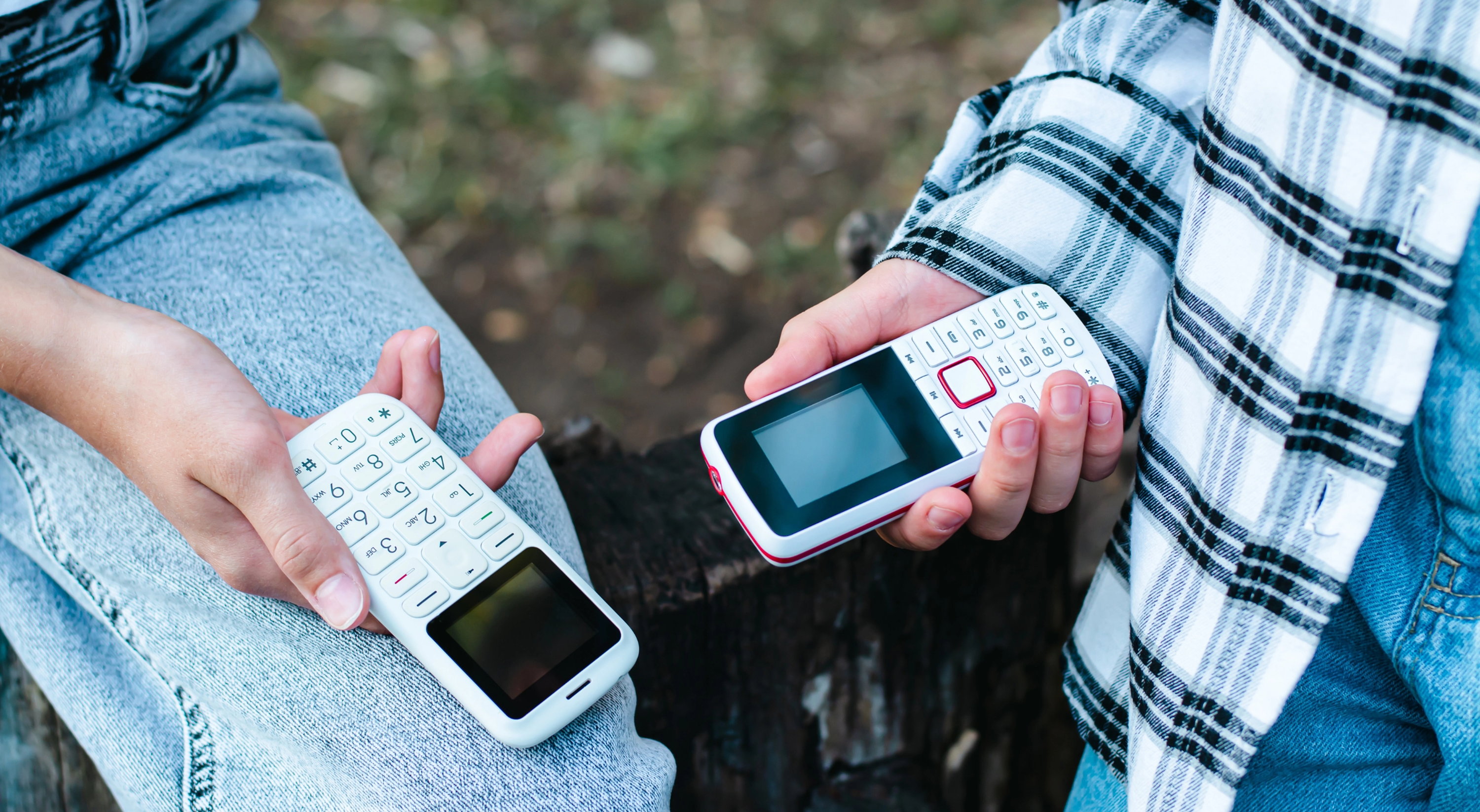
Traditionally, this meant using a prepaid phone and SIM card not tied to your identity or long-term carrier account, often discarded after a specific use, such as account registrations or marketplace listings.
Today, burner numbers are commonly virtual. Some carriers support eSIM-based secondary lines, while VoIP apps like Google Voice, Burner, and TextNow provide disposable phone numbers that work over the internet without needing a separate device.
Whether physical or digital, burner numbers help protect your primary number from spam, data exposure, and unsolicited calls and messages by keeping it separate from unknown services, low-trust platforms, and unverified contacts.
When To Use a Burner Phone Number
You can use burner phone numbers in any scenario where privacy or separation from your main line matters. Here are some common scenarios where you should consider using one:
Use Case | How a Burner Number Helps | Examples |
Online marketplaces | Shields your primary number from marketing lists, data broker collection, and scammers during transactions |
|
Work-life separation | Keeps boundaries between professional and private life |
|
Website and app signups | Provides SMS verification without flooding your main line with spam or marketing texts |
|
Travel | Avoids high roaming costs and provides a local number without exposing your primary line |
|
Short-term communication | Enables safe temporary contact without risking unwanted follow-ups or ongoing exposure |
|
How To Get a Burner Phone Number
The original method of purchasing a cheap feature phone and a dedicated physical SIM card still works. Burner phones are available at many convenience stores, big-box retailers, or online, and they’re typically sold for $20–$50 without a long-term contract. Once you have a burner device, you need to get a prepaid SIM from a retailer or a carrier store.
In the United States, you generally don’t need to provide ID proof to buy or activate a prepaid SIM card. Most carriers allow cash purchases at retail stores like Walmart or Target without any personal information. This is great if you want to avoid linking the burner number to your real identity.
If you’re particularly concerned about privacy, you can take extra steps like:
- Paying with cash
- Avoiding store loyalty programs or registration cards that ask for your name, address, or email
- Activating the connection in a public place, and not at your home
- Keeping Wi-Fi, Bluetooth, and GPS off whenever not using them
Once activated, you can use the temporary phone number for regular texts and calls, top up airtime as needed, and discard it when done.
Using Virtual Burner Numbers via VoIP Apps
VoIP apps offer a modern, more convenient way to use alternate lines, letting you generate numbers that can be controlled via apps or web dashboards through your phone or computer.
Here’s a general overview of how virtual phone numbers work:
- You download the virtual phone number app and create an account
- Depending on the service, you can create virtual numbers for free or may be required to purchase a monthly subscription
- You choose a number typically by area code and can start calling and texting over Wi-Fi or mobile data
Because virtual numbers are software-enabled, you get advanced features that traditional cellular numbers can’t offer. Here are some popular apps you can choose from:
App | Pricing | Key Features |
Burner | $4.99/mo (unlimited talk/text); pay-as-you-go from $1.99/7 days |
|
Google Voice | Free for personal use (U.S. and Canada) |
|
MySudo | $0.99/mo (SudoGo: 1 number, 100 msgs/30 min); $14.99/mo (Pro: 9 numbers, 200 min) |
|
TextNow | Free (ad-supported) or $4.99/mo ad-free |
|
Hushed | $1.99/7 days or $3.99/mo |
|
However, virtual numbers come with practical limitations. Many banks, financial apps, and social platforms block VoIP services for SMS verification as they’re easily hijacked and harder to verify. Many of these apps lack end-to-end encryption (E2EE), which means your calls and texts use public internet protocols, making them vulnerable to interception.
Virtual numbers work best for casual use: online marketplaces, dating apps, and website signups where 2FA isn't required. They offer convenience and flexibility but aren't a replacement for carrier-issued secondary numbers.
Physical vs. Virtual Burner Numbers: Pros and Cons
Physical prepaid phones and virtual, VoIP-based numbers have different trade-offs in privacy, cost, and convenience.
1. Physical Burner Phones Pros and Cons
Physical burners offer strong privacy benefits but come with several limitations. Before buying a second device or SIM card, it helps to weigh the practical trade-offs.
Pros of burner phones:
- High anonymity: You can buy with cash, often with minimal personal information or even no ID proof.
- Low upfront cost: A basic flip phone can cost as low as $15–$20, while prepaid SIMs/plans range from $10–$40 per month.
- Full cellular reliability: A prepaid burner phone works natively for calls and texts like any other cellular line.
- Disposable: It’s easy to discard after use without affecting the primary number.
- Hardware isolation: Your primary phone and personal data stay completely separate from burner activity.
- Long battery life: Basic dumb phones often last days or weeks on a single charge.
Cons of burner phones:
- Limited functionality: Dumb phones can’t run encrypted messaging apps like Signal or WhatsApp and lack advanced perks like spam filtering and caller ID.
- Lack of full anonymity: Carriers can still log and potentially share activity, metadata, and identifiers like IMEI and IMSI.
- Upfront hassle: You need to buy a SIM and carry a separate device, or purchase a smartphone with dual SIM support.
- Limited longevity: Balance expires if unused; frequent top-ups are needed for extended use.
2. Virtual Burner Numbers (VoIP Apps) Pros and Cons
The primary appeal of virtual burner numbers is convenience and flexibility. However, since VoIP apps depend on internet protocols and the provider’s security infrastructure, they also come with specific tradeoffs compared with cellular lines.
Pros of virtual burner numbers:
- Quick setup and convenience: You can get a burner VoIP number within minutes by downloading an app and choosing a number.
- Lower cost for many use cases: Many VoIP apps are much cheaper compared to cellular alternatives, and some even offer free tiers with limited features.
- Flexibility: You can make calls and send texts from multiple devices, like your smartphone, tablet, or laptop, using Wi-Fi or mobile data.
Cons of virtual burner numbers:
- Internet dependency: You can’t use a virtual phone number offline, and a poor internet connection can cause call drops, jitter, or latency.
- Lack of encryption: Your communications and associated metadata can be visible to the provider and intermediary networks unless E2EE is enabled by default
- Security risks: VoIP-based communication can introduce vulnerabilities like eavesdropping, identity spoofing, and spam over internet telephony (SPIT) if proper protections aren’t in place.
- Reliability issues: VoIP services are often blocked by apps and services for 2FA or SMS verification.
Can Burner Phone Numbers Be Tracked?
Yes, both prepaid SIM burners and VoIP-based numbers can be tracked by the service provider, network operators, and government authorities.
If you’re using a prepaid burner phone, it still connects to the public cellular network like any other mobile device. This allows carriers to log things like:
- Call detail records (CDRs)
- SMS content
- Timestamps
- Approximate location using cell tower triangulation
- Your SIM’s identifiers, such as IMSI, which link activity to the device on the network
Additionally, with a legal request, such as a subpoena or court order, law enforcement can obtain this data from the carrier and use it to track communications linked to that burner number.
VoIP apps technically work differently, but they can also be traced. Even if the actual payload is encrypted, the network and app provider can see connection metadata tied to your session, including IP addresses, call duration, and participants.
Apps that are tied to your Apple ID or Google account also create a direct link between your burner number and your identity. Law enforcement can subpoena app providers for account data and communication records.
The bottom line: Burners reduce casual exposure to spammers and strangers. They don't protect against the data collection practices of providers, network interception by cybercriminals, and targeted surveillance.
If your goal is stronger day-to-day privacy—especially without the limitations of traditional burner phones or the metadata exposure of VoIP apps—consider a privacy-focused alternative like Cape. We offer an eSIM-based phone line that’s more secure than traditional carriers. You also get up to two secondary numbers with your primary line that you can use to separate communications by purpose.
Cape: The Carrier Built for Security and Privacy
Cape is a privacy-first mobile carrier designed to keep your communications safe from surveillance and misuse. Unlike traditional cell phone plan providers, our business model centers around providing you with premium and secure call, text, and data, rather than harvesting and selling your information.
Our service is built from the ground up with privacy and security at its core, offering unique features like:
Privacy & Security Feature | Description |
Many services ask for your phone number, but sharing it exposes you to spam, scammers, data brokers, and a variety of other risks. VoIPs, on the other hand, don’t work with 2FA, cost extra, and aren’t encrypted. With Cape, you get two free additional SMS/MMS lines that are middle-to-end encrypted. | |
Cape doesn’t ask for your name, address, or Social Security number. We only collect the information necessary to provide service, and we retain that information for the minimum amount of time possible. | |
Traditional carriers rely on a fixed International Mobile Subscriber ID (IMSI) to connect your device to cellular networks. This is a vulnerability that lets carriers, advertisers, and bad actors identify and track your device. Cape lets subscribers automatically rotate their IMSI every 24 hours, making it infinitely more difficult to track you or your device. | |
Most U.S. carriers store your call and text metadata for years, sometimes indefinitely. Cape is built to forget, so call data records (CDRs) are deleted after just 24 hours. | |
Cape nullifies the threat of SIM swapping by completely removing humans from the loop. During signup, you receive a 24-word phrase that generates a private key tied to your number. This effectively means that no one (but you) can move your number to a new carrier or device, not even Cape. | |
Legacy network protocols, like SS7, leave you vulnerable to hackers that can track your location, intercept your calls and texts, and steal sensitive information. Cape’s Network Lock relies on a proprietary signaling proxy to verify that your device’s physical location matches the network it’s trying to attach to. If we detect anything out of the ordinary, Cape automatically blocks the connection, nullifying the potential threat. | |
Traditional voicemail systems are outdated, unencrypted, and another security hole bad actors can exploit to gain access to your sensitive information. Cape encrypts all voicemails, ensuring only you can access them. | |
While roaming, your phone connects to local telecom providers to enable service. But, who knows who might be listening on the other end. Cape provides you with peace of mind by routing your traffic through our U.S.-based mobile core, ensuring your identity, data, and communications remain private and secure. |
Ditch Legacy Carriers: Get Cape Today
Cape is a “Heavy” Mobile Virtual Network Operator (MVNO), meaning we own our mobile core and provision our own SIMs. This gives us full control over how accounts are authenticated and what data is collected (and for how long), and is how we are able to provide privacy and security features no other carrier on the market can offer.
Get started with Cape today and enjoy the peace of mind, knowing you are fully protected against scammers, hackers, bad actors, and other mobile threats.
To help protect more than just your phone, we’ve partnered with Proton. As a new Cape subscriber, you can choose between Proton Unlimited and Proton VPN Plus for just $1 for six months.
Share it