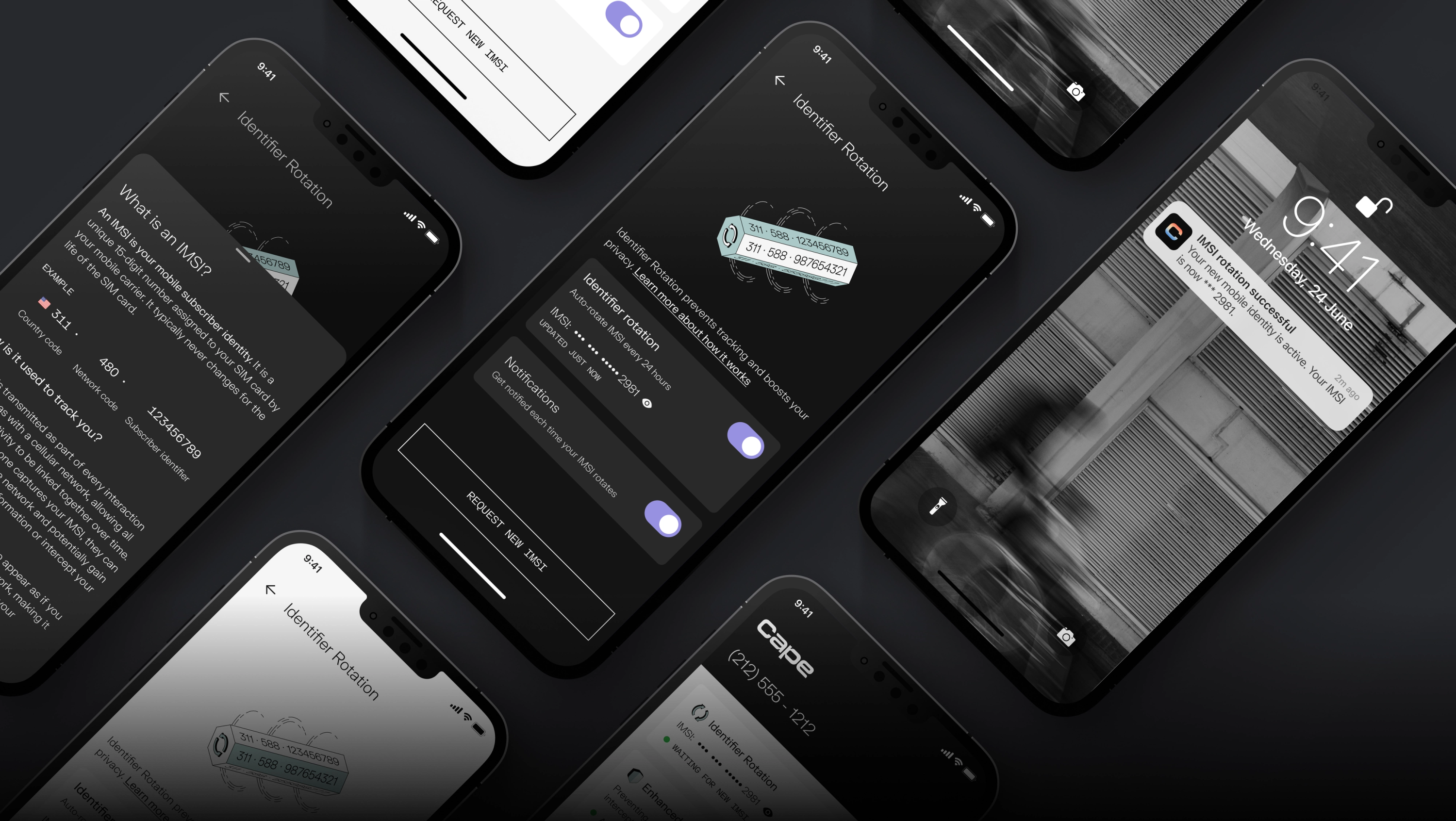
Our lives revolve around our phones. They go everywhere we go, and in doing so, they share a lot of information to the network: where we are, who we’re talking to, what we’re browsing, and more.
Most cellular carriers collect all of this information, building detailed profiles of us to sell to third parties and ad networks. When they’re not selling our data, they’re losing it in breaches, where it falls into the hands of bad actors who can hijack accounts or steal our identities.
The key to this persistent tracking is a static identifier known as your International Mobile Subscriber Identity, or IMSI.
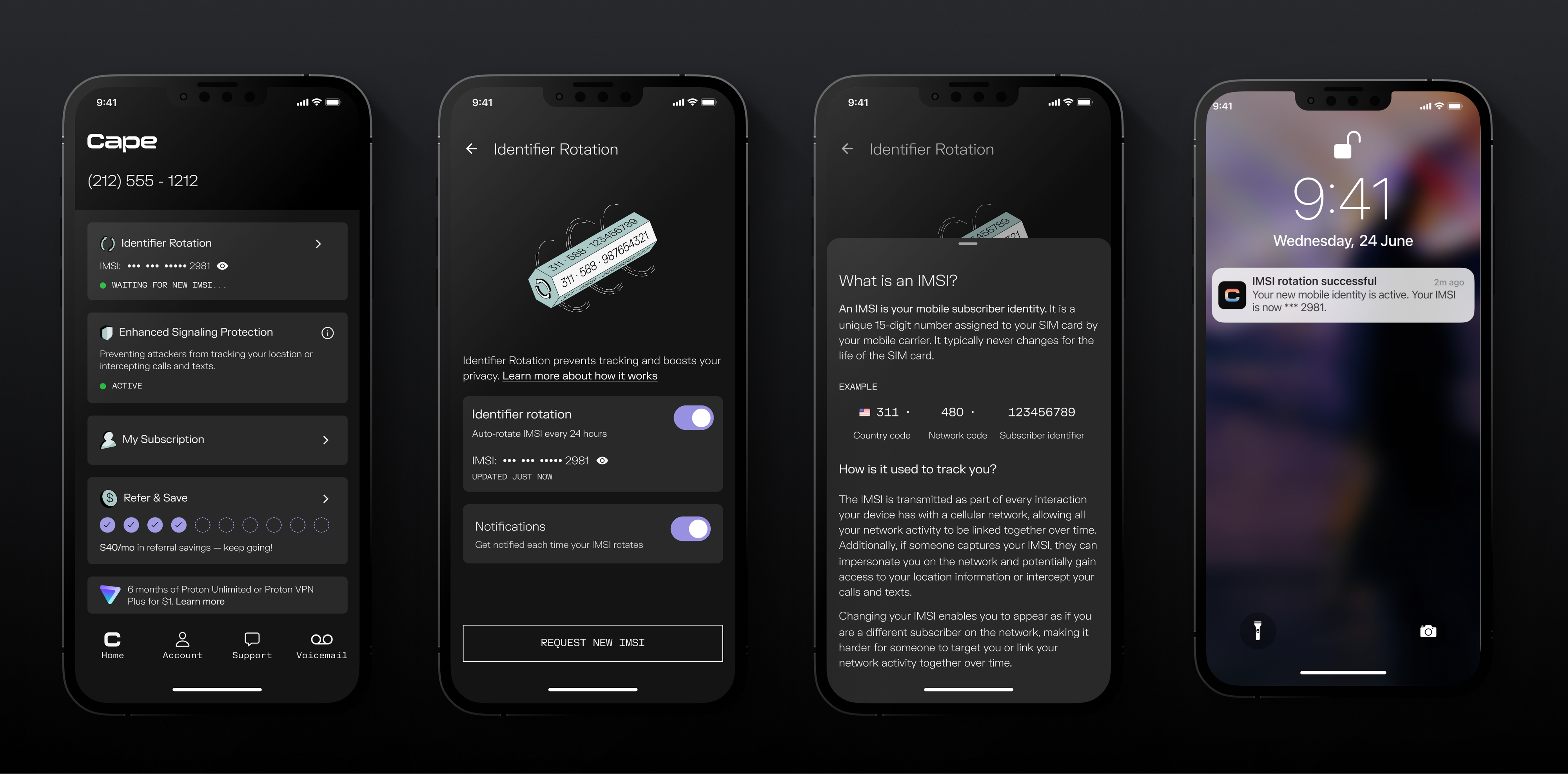
Your IMSI is a unique number assigned by your mobile carrier when you sign up for service. It lives on your SIM card and typically never changes. Every time your phone connects to the network, it shares this identifier, allowing anyone with network access to track everywhere you’ve been and to build a complete picture of your life over time.
In fact, German privacy advocate Malte Spitz, after a lawsuit requesting his operator to share what information they had stored about him, received 35,830 lines of code detailing nearly minute-by-minute accounts of half a year of his life, including a train ride between Frankfurt and Cologne, and everyone he called during that trip.
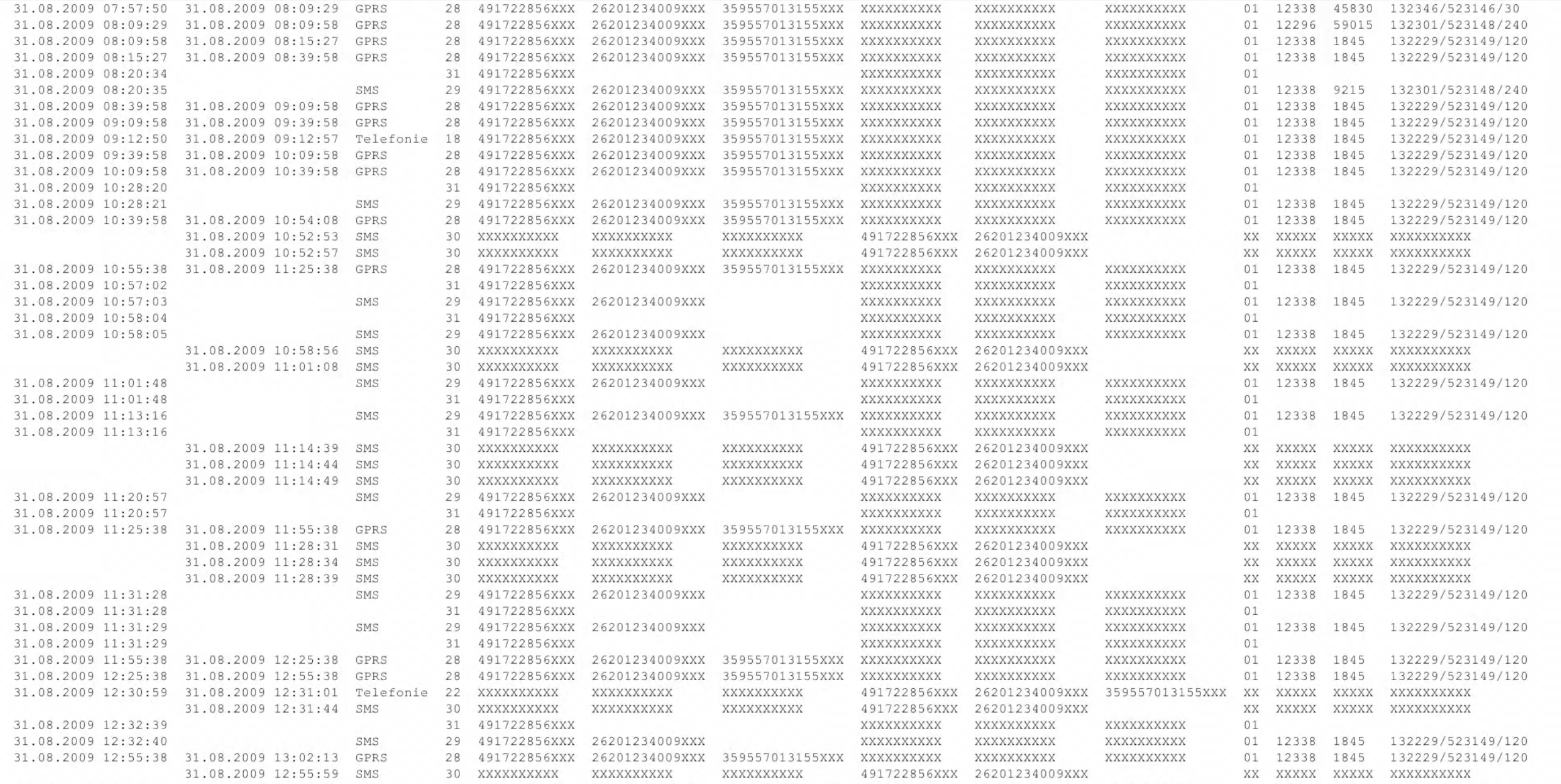
A sample of the 35,830 lines of code detailing Malte Spitz's every day activity.
With access to your IMSI:
- Carriers can profile your behavior, sell it to third parties and ad networks, or lose it in breaches.
- Governments can subpoena records associated with your IMSI, sometimes even without a warrant.
- Attackers can launch SS7 and other signaling attacks once they know your IMSI.
In short: your digital footprint is stamped with your IMSI, which makes it easy to identify and follow.
But what if you could change your IMSI every day?
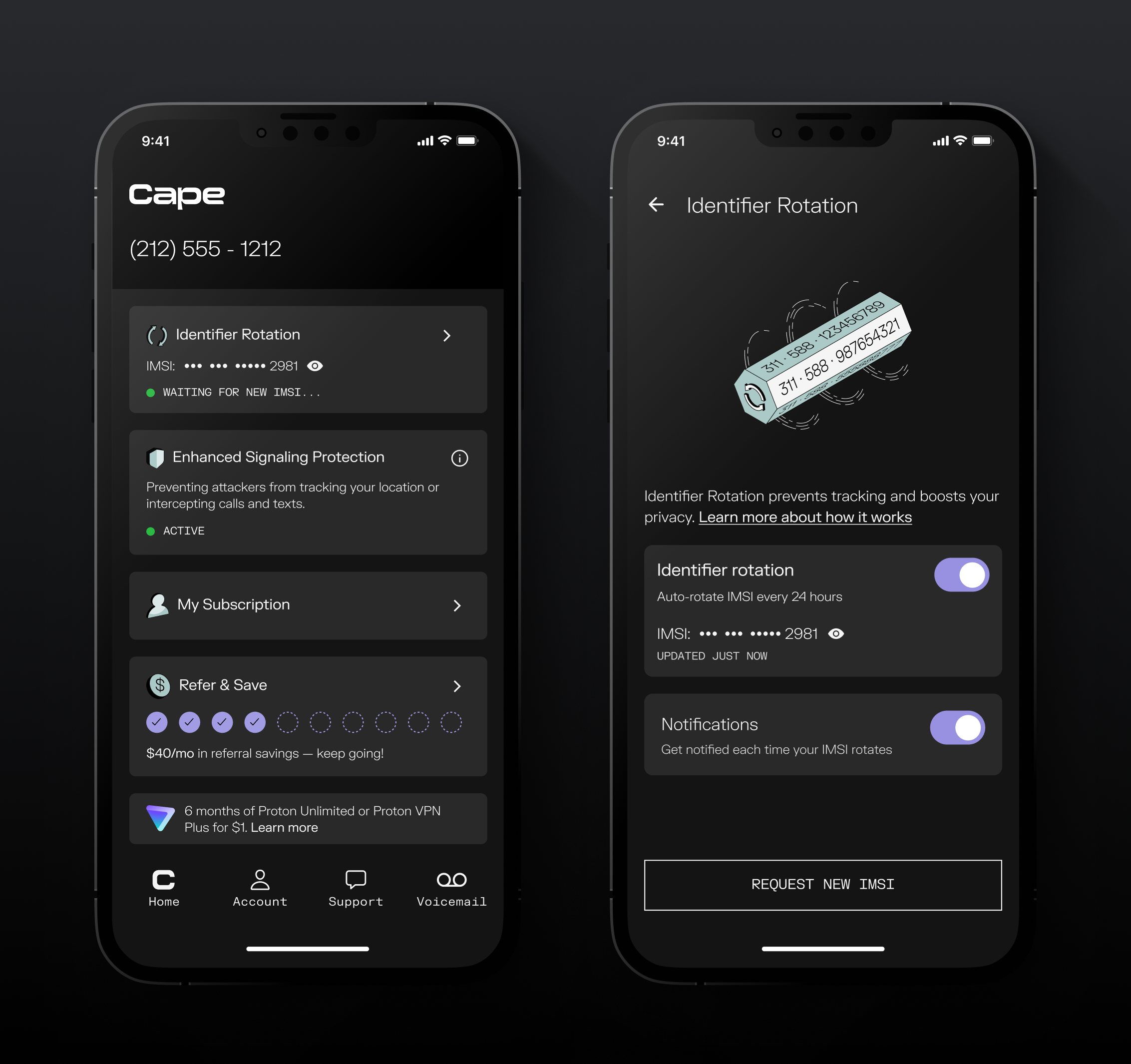
We’re excited to announce that Identifier Rotation is now live in the Cape app on select devices! Previously, this feature was only available through our Obscura service (which was recently selected as one of TIME’s Best Inventions of 2025!), but due to strong interest from our community, the team has been working hard to make it available to more people.
What Is Identifier Rotation?
Cape’s Identifier Rotation automatically rotates your IMSI on a daily basis, and also allows you to change your IMSI on-demand at the tap of a button within the Cape app. By making your IMSI ephemeral, Cape protects you from tracking over time. Your daily behavioral patterns, like your commute to work, gym routine, and more, would be scattered among constantly changing IMSIs.
Rotating the IMSI also strengthens existing Cape protections like Enhanced Signaling Protection, which was designed to defend against SS7 and other signaling attacks that allow remote location tracking and interception of phone calls and texts. Researchers found that signaling attacks always start with the “harvesting” or identification of a target IMSI, and that years typically go by between the harvesting and the actual attack. Daily IMSI rotation effectively nullifies this attack, as the adversary would be targeting an IMSI that you no longer use.
Who’s This For?
None of us want to live in a world where our every movement and activity is tracked. Identifier Rotation is for anyone who wants to actively opt out of always-on surveillance, from journalists, activists, executives, domestic abuse survivors, investors, frequent travelers, to any one who wants to limit location tracking and behavior profiling by their mobile carrier and other third parties.
What IMSI Rotation Can and Cannot Protect You From
How Does IMSI Rotation Work?
Cape provides each subscriber with a set of seven unique IMSI values per week from a large pool of reserved numbers. Once Identifier Rotation is enabled, your phone's IMSI will automatically cycle to a different one every 24 hours, giving you a completely new network identity each day. This system effectively makes you appear as a different person on the network each and every day.
After seven days, your old set is retired, and you’ll be assigned a new set of seven random IMSIs for the following week. All IMSI value sets are pulled from a common, dynamic pool that cycles constantly among Cape customers. This means that each IMSI value has associated with it a tangled history of activity, making it much harder for anyone to track you. Because an individual IMSI is quickly reassigned and used by many different customers over time, it accumulates a shared, complex history of activity. This design diffuses the connection between any single IMSI and your identity, providing a powerful layer of privacy.
You can also choose to rotate your IMSI manually from the app, which you may use in high-risk moments like crossing a border or attending a protest. When you manually rotate, your device simply cycles to the next IMSI in your weekly set. Identifier rotation does work while roaming internationally. In fact, your device will rotate your IMSI automatically once it detects that you are abroad.

How to Start Using Identifier Rotation
Identifier Rotation is available on iPhone (11 and later), Google Pixel devices (including with GrapheneOS), and all Samsung devices on OneUI 9.0 and later.
For detailed instructions on how to activate the feature, see this Support Article.
Technical Appendix: Transmission of IMSI and IMEI per 3GPP standards
IMSI rotation is effective against various threat models, even without simultaneous IMEI rotation. This appendix explains how the handling of IMSI and International Mobile Equipment Identity (IMEI) has evolved across network generations according to 3GPP standards.
IMSI catchers can obtain IMSIs even though 5G standards introduce the Subscription Concealed Identifier (SUCI), where the IMSI is encrypted with the operator’s public key, because 5G coverage is not universal and so IMSI catchers can always downgrade the target device to 4G or below. In 4G, the IMSI is sent in plaintext on the initial attach, and the 4G standard also allows the device to transmit its IMSI in plaintext even to unauthenticated entities (e.g., IMSI catchers). In 2G and 3G, the IMSI is transmitted in plaintext and their standards do not have restrictions on transmitting IMSI.
Obtaining the IMEI requires mutual authentication and key agreement between the network and the device, so the carrier itself must be compromised in order for this attack to work. Even advanced IMSI catchers that can obtain the IMEI do so by first acquiring the target’s authentication-related information with the help of prior SS7/Diameter attacks, which in turn begins with an IMSI request. Therefore, Cape’s Identifier Rotation can thwart even advanced IMSI catchers, because their attacks must begin with the valid target IMSI.
An IMSI catcher could circumvent the 3GPP requirement for mutual authentication and key agreement by downgrading to 3G or 2G, where the IMEI is transmitted in plaintext. Cape subscribers who pair Cape service with GrapheneOS (a privacy-focused Android fork), can lock their network to 4G by enabling “LTE-only” mode, thereby blocking the downgrade attack. See instructions for installing GrapheneOS here.
Share it